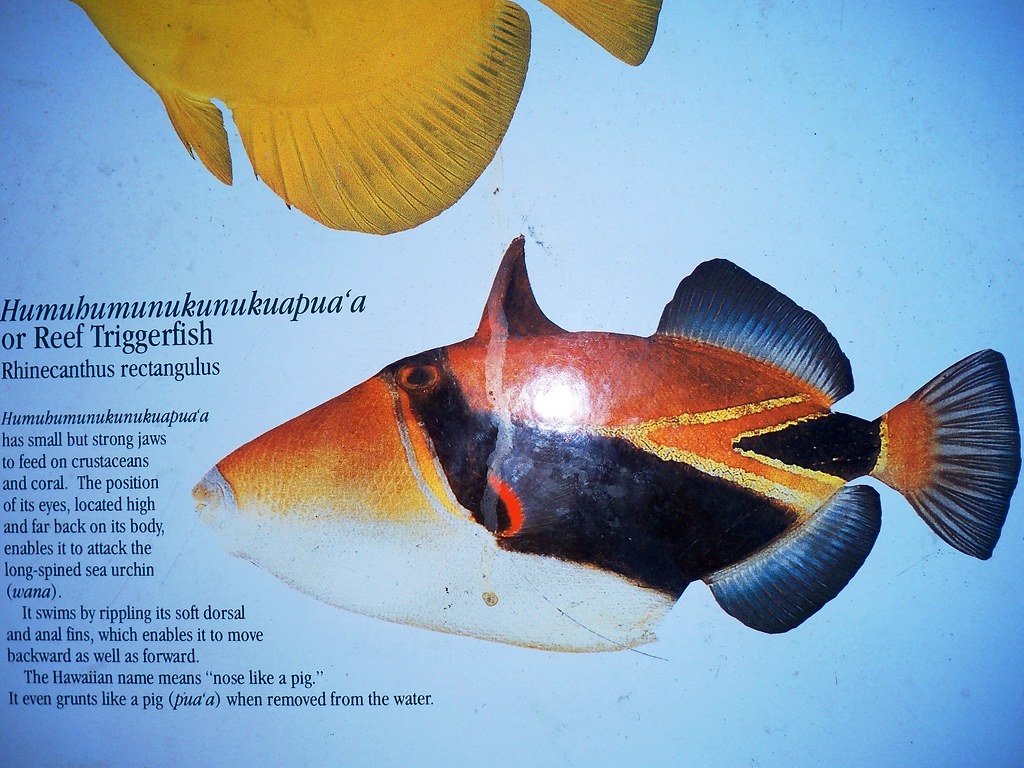
For snorkelers visiting marine reserves like Hanauma Bay on Oahu, Kealakekua Bay on Hawaii Island, or Molokini Crater off Maui, spotting a humuhumunukunukuāpuaʻa is common. They frequent shallow depths between two and fifteen feet, hovering inches above coral heads.
Their appearance is striking: an angular, diamond-shaped body marked by a vivid yellow wedge along the tail, blue-and-black facial stripes, and sharp orange accents around the fins. Their eyes sit high on the skull, mounted on independent swivels that scan for predators while their downward-angled mouths crush hard-shelled invertebrates.
When approached too quickly, the triggerfish displays unique defensive engineering:
- It darts headfirst into a narrow coral fissure. Once inside, it erects its sharp, thick first dorsal spine.
- It raises a smaller second spine behind the first, wedging the primary spine rigidly upright. No predator can pull the fish backward out of its hiding spot without snapping the coral shelf. Only when the fish depresses the secondary "trigger" spine can the primary barb safely fold flat again.
Swimmers should admire this fish from a respectful distance. While small, triggerfish possess strong jaws designed to crack open pencil urchins and calcified shells. If you crowd an active nesting site during breeding season, a parent humuhumu will charge, delivering a sharp, defensive nip to exposed fins or fingers.

