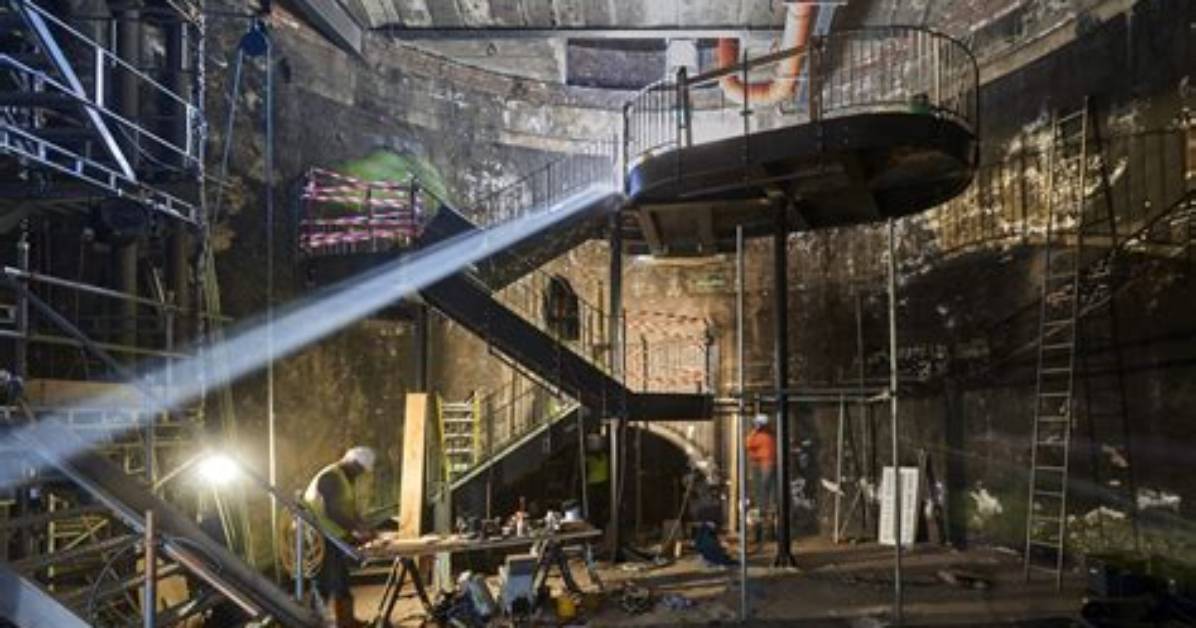
London during the early 1800s was the most congested trading port on the planet. Merchant ships choked the Pool of London, while ferries and barges created gridlock across the water. Traditional bridge construction downstream of London Bridge was impossible because tall-masted cargo vessels required uninterrupted clearance to dock. A tunnel beneath the riverbed was the only viable solution, but multiple early mining syndicates had abandoned their efforts after quicksand and water broke through their excavations.
French-born engineer Marc Isambard Brunel proposed a radically different method. Observing the shipworm Teredo navalis bore into naval oak timbers while lining its tunnel with a protective calcified shell, Brunel patented the tunnelling shield technology in 1818. This heavy cast-iron frame divided workers into 36 individual cells arranged across three vertical tiers. Men chiseled through mud and gravel one panel at a time while bricklayers immediately laid permanent masonry behind them.
His nineteen-year-old son, Isambard Kingdom Brunel, was appointed resident engineer in 1826, spending days and nights waist-deep in toxic slurry. The Thames during this era acted as an open sewer. Escaping methane ignited randomly, lighting up the dig face in bursts of flame, while hydrogen sulfide blinded laborers. Despite five catastrophic river breakthroughs, one of which swept the younger Brunel unconscious to the top of the shaft, the project pushed steadily across the tidal river, demonstrating that human transport could operate below flowing water.

