As popularity grew, so did scrutiny over culinary authenticity. The West African diaspora is not monolithic, and the cross-border dialogue between Ghanaian and Nigerian preparations spilled directly into restaurant dining rooms. Media experiments testing cross-border recipes sparked passionate debates over whose kitchen techniques yielded superior flavor balance.
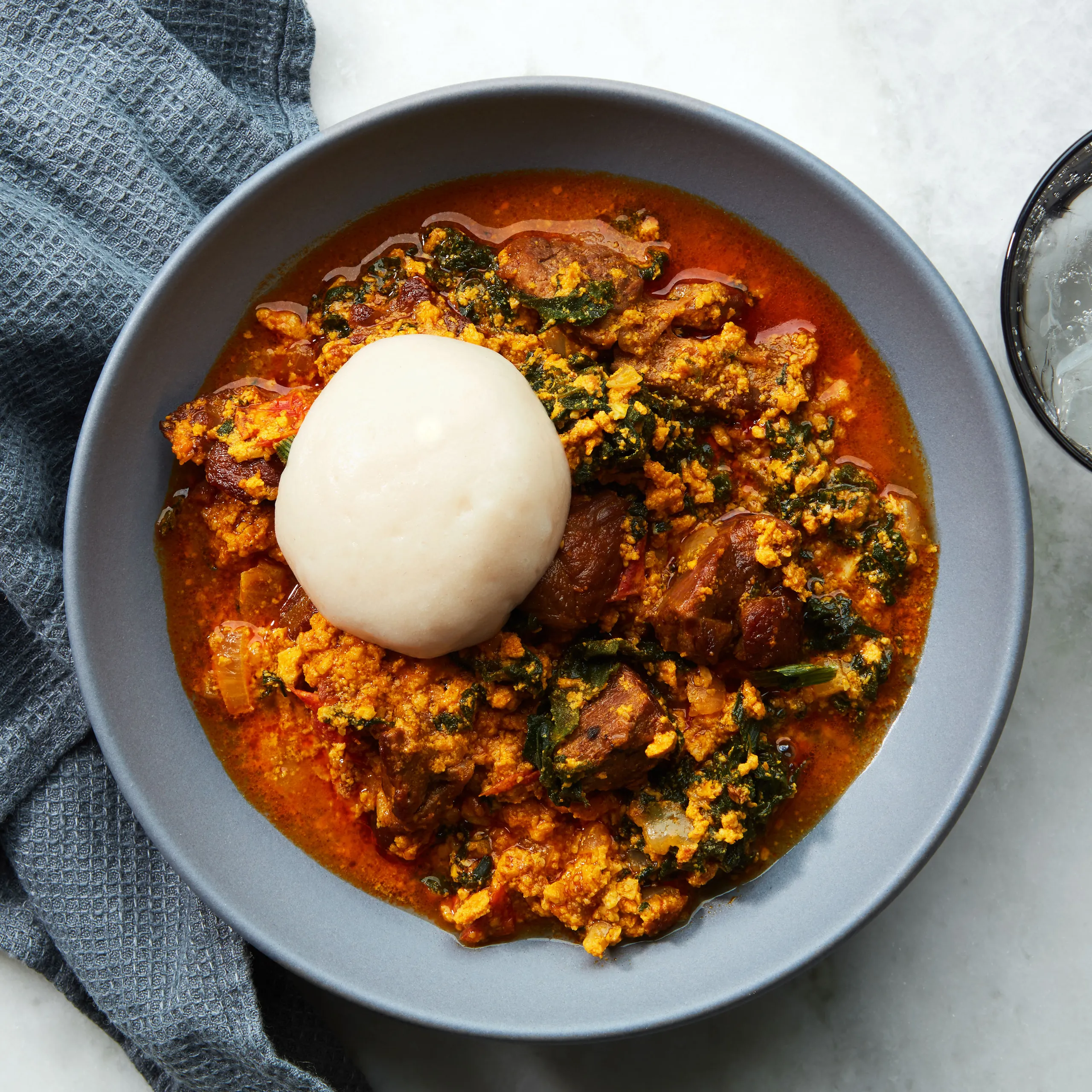
The differences run deep through raw ingredients and preparation rituals. Ghanaian fufu varieties lean heavily on pounded green plantain blended with cassava, resulting in a lighter, mildly sweet swallow with an ivory-yellow tint. In Ghana, diners typically pair this swallow with thin, intensely spiced light soups, peanut butter stews, or palm nut broths. Egusi, while consumed in Ghana under the name agushie, is more commonly incorporated into vegetable-heavy stews rather than serving as the thick, rich vessel seen across southeastern Nigeria.
Nigerian preparations, by contrast, treat egusi as an architectural centerpiece. The texture is intentionally thicker, leaning on pounded yam or fermented cassava flour (eba) to scoop up dense clusters of ground seeds. Nigerian cooks often incorporate iru (fermented carob or locust beans), which releases a pungent, savory aroma that defines the pot. Kitchens that navigate both styles successfully have learned to print distinct menu explanations, guiding unfamiliar diners away from mismatched pairings.

